7 Most Important Aspects of a Natal Chart
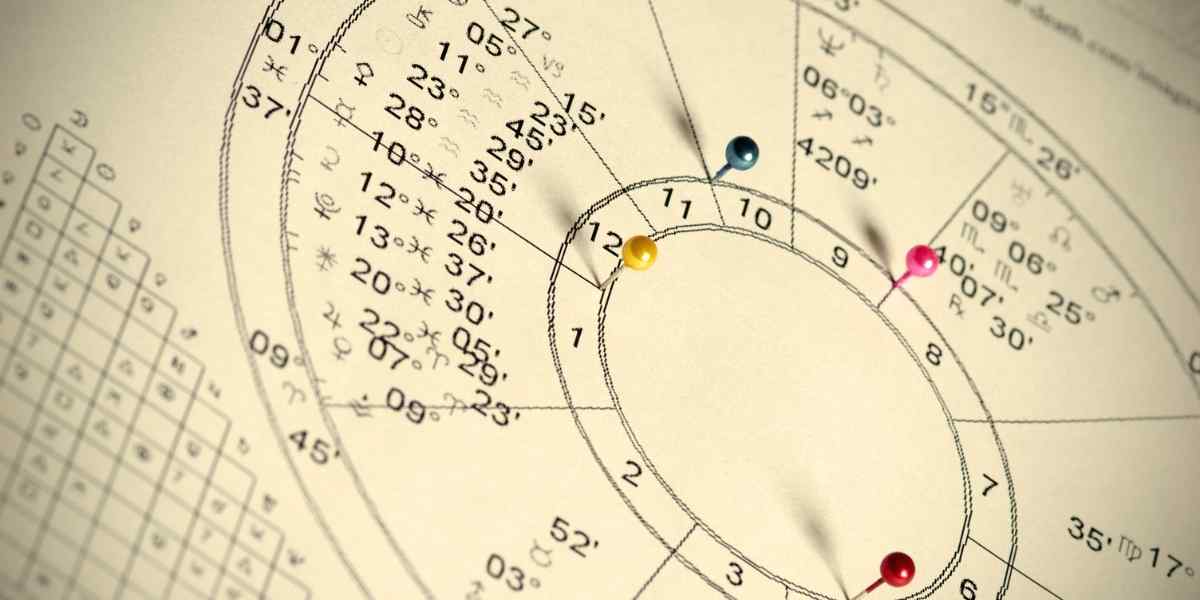
A natal chart is a map of the sky at the exact moment and location of your birth, and it contains considerably more information than your Sun sign alone. If you want to understand how astrology actually works as a system, you need to understand these seven layers in sequence. Start with the angles before you look at the planets. The frame shapes what everything else means.
The short answer: The seven most important aspects of a natal chart are the angles, the quadrants, the Sun, the Moon, the inner planets, the outer planets, and the aspects and patterns that connect them.
1. The Angles
The angles are the four cardinal points of the chart, and they form the essential frame before anything else is interpreted. The Ascendant, sometimes written as AC, is the sign rising on the eastern horizon at the moment of birth. It describes how you present yourself to the world and the general structure of your life experience.
Directly opposite the Ascendant across the circle of the chart is the Descendant, which represents the qualities you are drawn to in others and the kinds of people you attract into close relationships.
The second axis runs between the Midheaven (MC, from the Latin Medium Coeli) and the Imum Coeli (IC). The Midheaven points toward the more public dimensions of life, including career and reputation. Jobs Based on Your Birth Chart goes into detail on how that Midheaven placement shapes the kind of work that actually suits you. The IC represents the most private foundation: home, family, and inner roots.
A planet positioned very close to any of these four angles carries heightened significance in the chart because it directly colors that area of life.
2. The Quadrants
The intersection of the two angle axes divides the chart into four quadrants. Each quadrant is then subdivided into three houses, producing the twelve-house system used in most Western astrology. The quadrants provide a quick visual impression of where the chart’s energy is concentrated before you read individual planet placements.
If most planets cluster in the lower half of the chart, the person tends toward a more private or inwardly focused life. Weight on the right side, near the Descendant, suggests a stronger pull toward others. The left side, near the Ascendant, tilts toward self-direction.
3. The Sun
The Sun sign describes your core life purpose, basic personality expression, and the traits that become visible to people who know you in ordinary circumstances but not intimately. Coworkers and classmates who see you regularly tend to observe your Sun sign qualities most clearly.
The Sun also determines in which house it falls based on your birth time, and that house placement adds specificity to how the core personality expresses itself. A Leo Sun in the twelfth house operates quite differently from a Leo Sun in the first, even though both carry the same solar fire.
4. The Moon
The Moon sign describes your deeper emotional nature, the way you respond instinctively to life, and the qualities that are most visible to people in genuinely close relationships with you. You can often hide your Moon from acquaintances while your Sun sign is relatively transparent.
The Moon also indicates the phase of the lunar cycle at the moment of your birth. Someone born at a New Moon has the Sun and Moon in the same sign. Someone born at a Full Moon has them in opposing signs. Some astrologers incorporate this cycle into how they interpret emotional patterns and life themes. The Moon’s placement also factors into questions about fertility and timing. For a broader look at how the Moon interacts with other chart factors, the seven most important aspects of a synastry chart explains how your Moon sign creates chemistry or friction with a partner’s chart.
5. The Inner Planets
The inner planets are Mercury, Venus, and Mars. Mercury moves quickly and generally stays within two signs of the Sun, shaping how you think, communicate, and process information. Venus describes what you value, what you find beautiful, and how you approach love and money. Mars describes how you take action, pursue goals, and handle conflict.
Because these planets move relatively quickly through the zodiac, they define the individual quirks that distinguish people born in the same year, even with the same Sun sign. Two people born a month apart may share a Sun sign but have Mercury, Venus, and Mars in very different signs.
6. The Outer Planets
Jupiter, Saturn, Uranus, Neptune, and Pluto move slowly enough that entire age groups share the same outer planet placements. Jupiter and Saturn are the social planets, connecting individual experience to broader cultural patterns. Uranus, Neptune, and Pluto are the generational planets, shaping the collective themes that define an era. Pluto in particular gets applied to questions like whether astrology can predict death, since it governs transformation, endings, and irreversible change.
When an outer planet makes a close aspect to a personal planet or luminary in your chart, the generational energy becomes personal. The collective theme intersects with your individual life in a way that feels particularly charged or significant.
7. Aspects and Patterns
Aspects are the angular relationships between points in the chart, and they describe how different parts of the personality relate to or tension against each other. Harmonious aspects include trines (120 degrees, four signs apart) and sextiles (60 degrees, two signs apart). Challenging aspects include squares (90 degrees, three signs apart) and oppositions (180 degrees, directly across the chart).
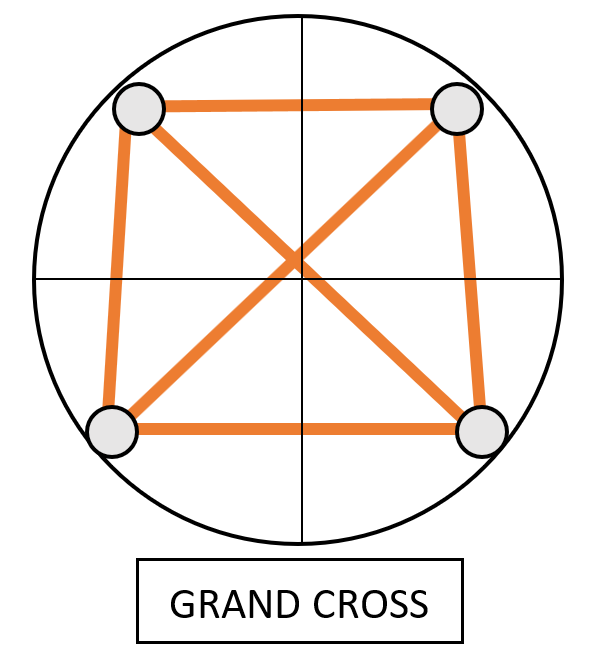
Certain configurations of aspects form identifiable patterns. A T-square is an opposition where both ends square a third point, creating internal tension that demands action. A grand cross adds a fourth point, intensifying that pressure further. A grand trine connects all three signs of the same element, producing a more flowing energy that still benefits from conscious direction. Understanding the T-square in astrology is useful for anyone whose chart carries that particular configuration.
Final Thoughts
These seven layers build on each other in sequence. The angles establish the frame. The quadrants show where energy concentrates. The Sun describes the core personality. The Moon describes the emotional interior. The inner planets refine individual expression. The outer planets connect you to your generation. Aspects show how all the parts relate.
Read the chart in that order and you will have a far more accurate picture than any single placement can provide. Once you have that foundation, reading two charts side by side in a synastry comparison becomes much more manageable.
The 7 most important aspects of a natal chart:
- The Angles - the four cardinal points that frame the chart
- The Quadrants - the twelve-house structural division
- The Sun - core purpose and visible personality
- The Moon - emotional nature and inner world
- The Inner Planets - Mercury, Venus, and Mars, defining individual expression
- The Outer Planets - Jupiter through Pluto, the generational layer
- Aspects and Patterns - how chart points relate and configure