How to Use Tarot Cards for Manifestation

Most people use tarot to ask questions about the future. Tarot for manifestation turns that relationship around. Instead of asking the cards what will happen, you use them to declare what you intend to create. The images, symbols, and archetypes in a tarot deck are powerful because they bypass abstract thinking and speak directly to the part of your mind that processes meaning through imagery. Choose a card that represents your goal, work with it consistently, and you are giving your intention a clear visible form that your subconscious can hold onto.
The short answer: To manifest with tarot, choose one or more cards that represent your goal, work with those cards through focused attention and a physical practice, and take real-world actions that align with your stated intention. The cards amplify direction; they do not replace effort.
Why tarot imagery supports the manifestation process
Visualization works as a technique because the brain responds to vivid, specific imagery in ways that vague intentions do not trigger. The tarot deck is a ready-made library of precisely that kind of imagery. The Major Arcana in particular carries centuries of symbolic weight, with each card representing a fundamental aspect of human experience from The Fool’s new beginning to The World’s completion. For a thorough introduction to how these cards work and what each represents, the complete guide to Major Arcana tarot cards is the best place to start. You do not need to understand every symbol in depth to use the cards for manifestation, but knowing the general character of the cards you select gives your practice more precision.
Starting with a single card
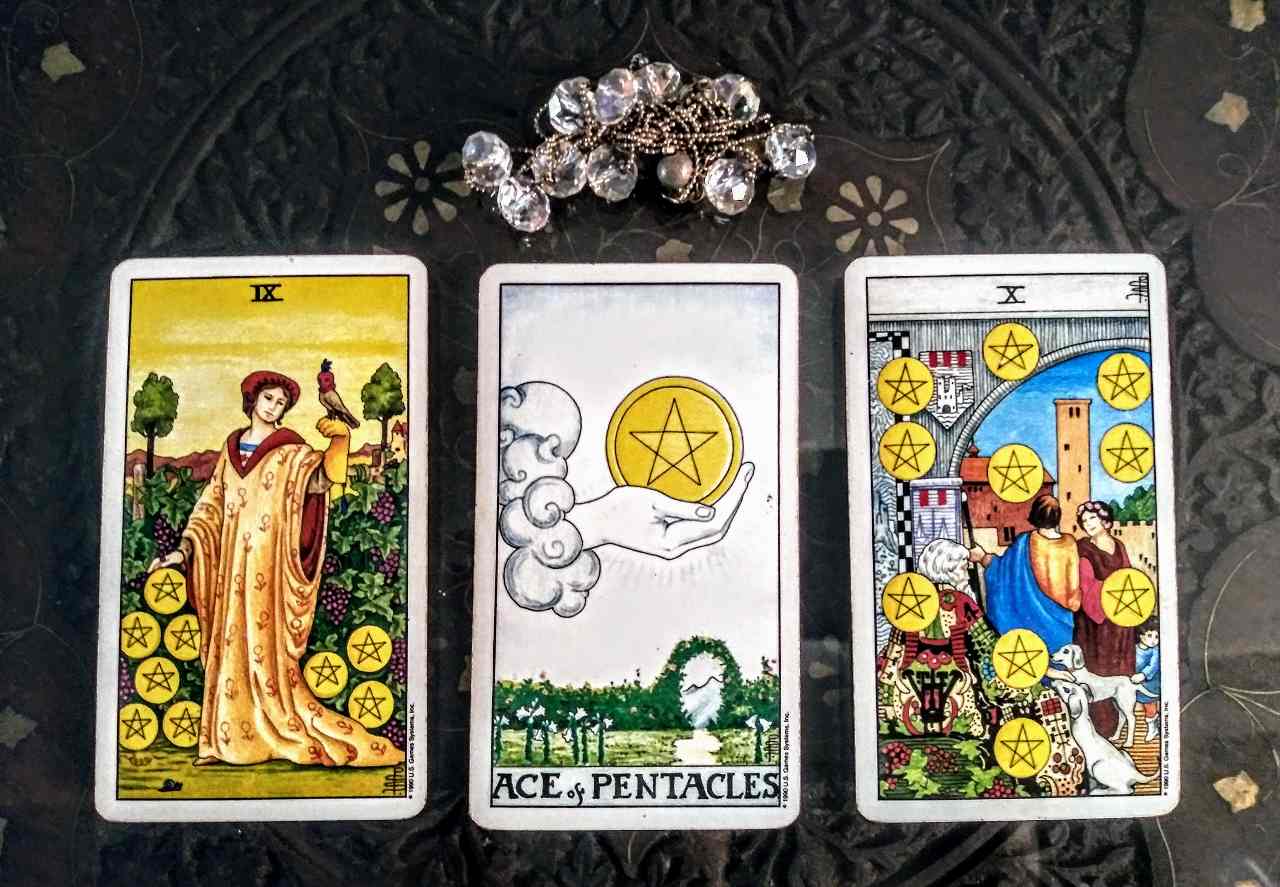
If you are new to this practice, one card is enough. Look through your deck and find the card that best represents the outcome you want. If your goal is financial stability and independence, the Nine of Pentacles (its image shows a figure surrounded by an abundant garden) captures that feeling accurately. If you want to start something new, The Fool or The Ace of Wands each carry the quality of fresh beginning and open possibility. Once you have your card, write a sentence or two describing what the goal means to you in concrete terms. Spend two or three minutes each morning holding the card and reading that sentence. This is not a ritual in the ceremonial sense. It is a focus practice that keeps your intention clear rather than letting it dissolve into background noise.
Three-card spreads for specific goals
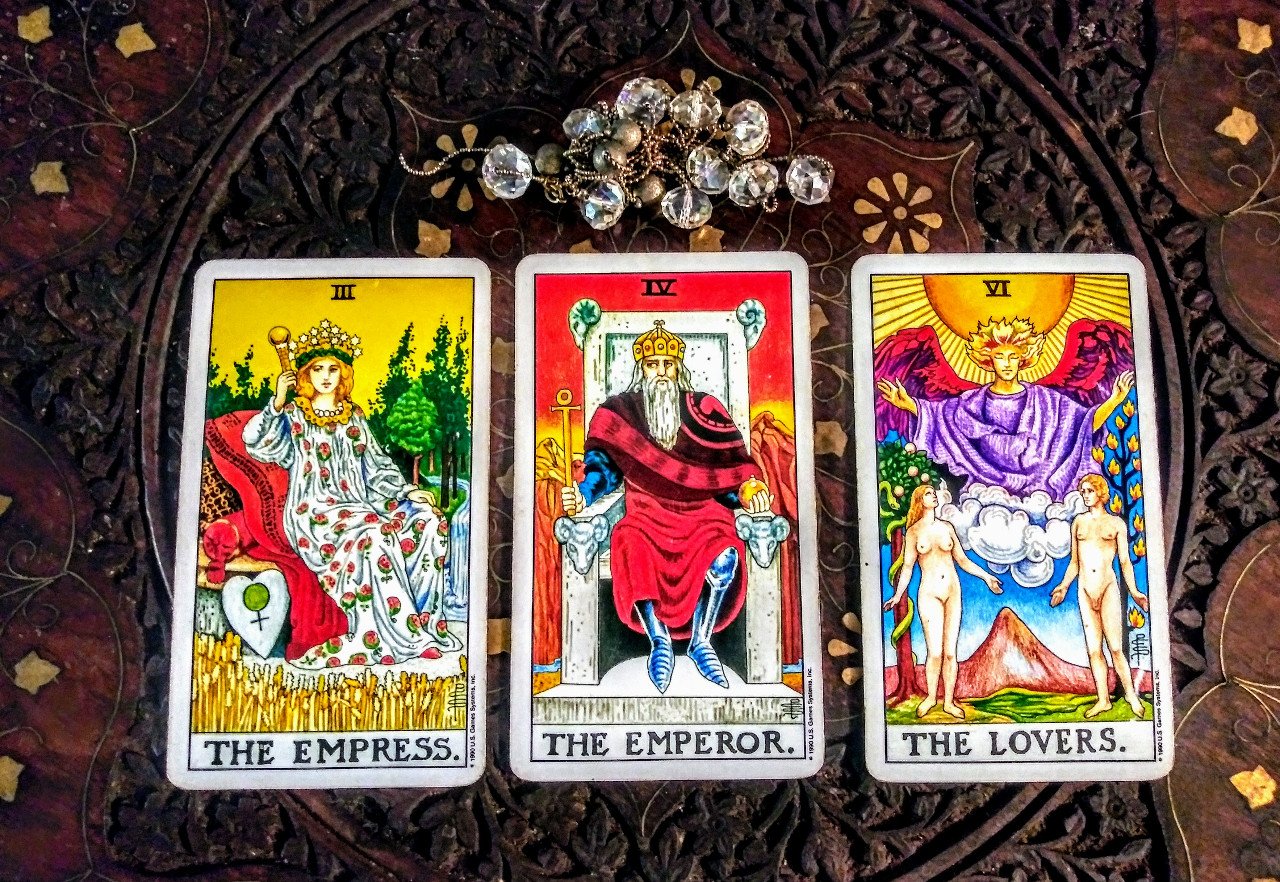
A three-card layout adds structure when your intention involves a process rather than a single outcome. A simple format that works for most goals: the first card represents where you want to be, the second represents how to get there, and the third represents the version of yourself who has arrived. For relationships, you might choose The Lovers or the Two of Cups for the outcome position. The path could be the Knight of Cups or The Star, and for the person you want to embody, the Empress. For financial goals, the Ten of Pentacles signals lasting abundance, the Three of Pentacles represents building through skill and cooperation, and the King of Pentacles represents someone whose relationship with money is grounded and generous. There is no single correct combination. What matters is that each card feels genuinely connected to your intention rather than selected arbitrarily. Best tarot spreads for relationships covers layouts that bring additional depth to questions of connection and partnership. Best tarot spreads for guidance is worth reading if you want to build a practice around a broader life question rather than a single goal.
Creating a physical anchor for your intention
You can carry the card with you, place it somewhere you see it daily, or build a small visual arrangement around it. Any of these gives your intention a physical presence that reinforces the mental practice. This does not need to be elaborate. A card on your desk or bedside table, visible each morning, keeps the image active in your peripheral awareness without requiring deliberate effort. Some people write an affirmation on a printout of the card rather than using a deck they read with regularly. Whatever form the anchor takes, consistency of placement matters more than the objects around it.
The action step that completes the intention
Manifestation without action is wishful thinking. The tarot practice works by maintaining the direction of your focus, but the outcomes you want require you to move toward them in the real world. If you want a new relationship, the cards can help you stay clear about what you are looking for and how you want to feel, but you still need to meet people, have honest conversations, and invest genuine effort. If you want financial change, the imagery can reinforce your sense of possibility, but you still need to make specific decisions with your money and your time. The two work together: the inner clarity the practice builds, and the outer actions that follow from it. It also helps to be clear-eyed about what tarot cannot do; 5 reasons why tarot cards can be wrong is a grounding read that keeps expectations realistic. Unlocking your inner power through aligned practice offers a broader framework that pairs well with this approach.