5 Reasons Why Tarot Cards Can Be Wrong
Tarot is one of the oldest forms of intuitive guidance. It draws on symbolism, energy, and the reader’s interpretive skill to reflect possibilities back to the person asking. Because readings involve interpretation rather than certainty, they are not infallible. Understanding why a reading might be inaccurate is just as valuable as knowing how to read the cards well.
The short answer: Tarot cards are not wrong in themselves. When a reading seems inaccurate, it is almost always because of something in the reading process, whether that is emotional interference, misinterpretation, or timing that has not yet resolved.
1. Your Trajectory Can Change
Tarot reflects the energy and direction of a situation at the moment of the reading. It maps where things appear to be heading based on current conditions. Since free will is always in play, the future it describes is a possibility. Not a fixed outcome.
If circumstances shift, if you make different choices, or if someone in the situation changes course, the predicted path changes too. A reading that seemed wrong may simply have described what was most likely at that specific moment, before things moved in a different direction.
2. You Were Not Ready to Hear It
Sometimes the cards describe something true that the reader or the person asking is not prepared to receive. When we have a strong emotional investment in a particular outcome, we can unconsciously filter or dismiss information that conflicts with what we want to hear.
If a reading seemed off, be honest with yourself. Was the message truly inaccurate? Or was it something you were not yet ready to accept? A good habit is to record your readings so you can revisit them later. If you eventually want to share one with someone else, it helps to understand what sharing a tarot reading actually involves. For more on how difficult card messages tend to land, exploring whether tarot cards bring bad luck addresses related questions about how we receive and process challenging readings.
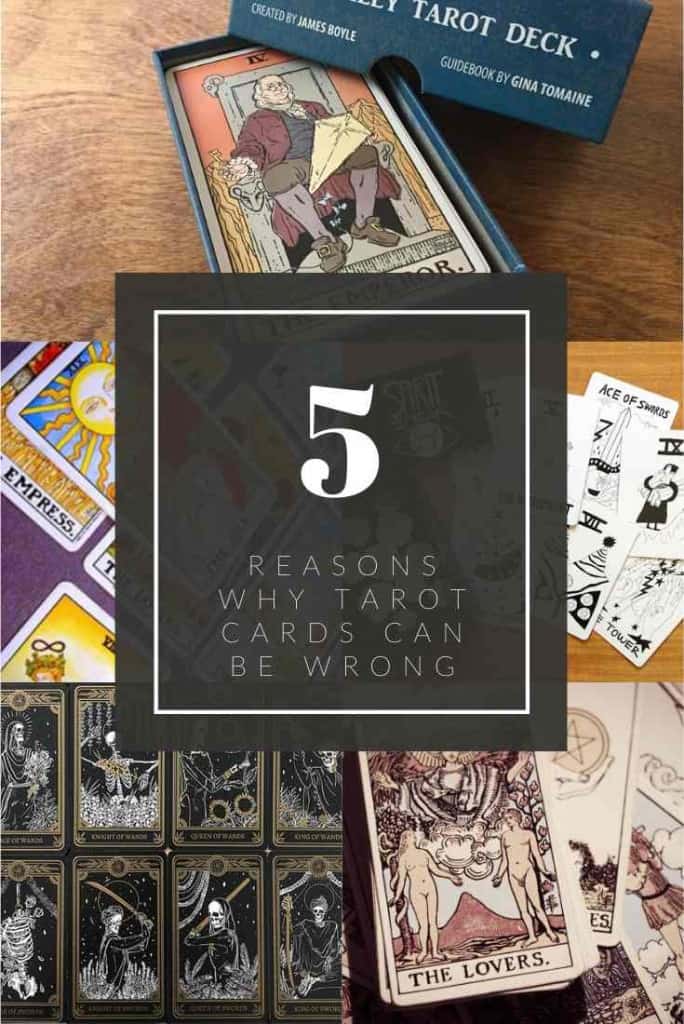
3. The Message Was Misinterpreted
Even experienced readers make interpretive errors. Tarot language is symbolic and layered, and meaning shifts depending on surrounding cards, the spread position, and the specific question asked. If the reader is tired, emotionally reactive to the question, or unfamiliar with the nuances of a particular card, the translation can go astray.
Emotional distance matters. A reader who is deeply invested in the question they are asking will tend to see what they fear or hope rather than what the spread is actually showing. Taking a break and returning to a reading later often produces a noticeably clearer interpretation.
4. You Were Not Meant to Know
Some practitioners hold that certain information is simply not available at certain times, that the timing is not right for a particular insight to come through clearly. This is not a failure of the cards. It is a feature of intuitive work.
If a reading produces confusing or contradictory information on a specific question, one interpretation is that the answer is not ready to be received yet. Returning to the same question at a later date sometimes yields a much clearer picture.
For more context on how reader skill and setting affect accuracy, looking at whether tarot readings on YouTube are accurate provides a useful parallel discussion about the many variables that shape a reading’s reliability.
5. More Time Is Needed
Tarot often surfaces information that makes complete sense only in retrospect. A reading might describe something that has not yet happened, or refer to a pattern that has not fully unfolded. What seems incorrect today may turn out to be surprisingly accurate weeks or months later. If you have ever wondered how far tarot’s predictive reach actually extends, can tarot cards predict death takes that question to its edge.
A practical habit is to keep a reading journal. Note the cards drawn, your initial interpretation, and what actually transpired in the following weeks. Over time, you will develop a sharper sense of how to interpret timing and understand the difference between a genuinely inaccurate reading and one that was simply ahead of its moment.
Final Thoughts
Tarot is a tool for reflection and insight, not a perfect prediction machine. Most situations where a reading seems to miss the mark trace back to something within the reading process itself, not any fundamental unreliability in the cards.
Approach readings with an open mind, create emotional distance from the question where possible, and keep records that let you revisit your interpretations with fresh eyes. Choosing spreads designed for guidance rather than pulling cards at random can sharpen things further. Those habits together will significantly improve both the accuracy and the depth of what you receive.